2025. Pictures of You and I.
The best wedding photography of 2025 150 favourites from Cheshire Wedding Photographer ARJ Photography® Every year I...
Read More


Article by Digital & Film Wedding Photographer ARJ Photography®
If you’ve been looking at wedding photography for a while, you’ve probably started noticing the words film and digital popping up everywhere. And if you’re wondering what the actual difference is – beyond one looking a bit more nostalgic and the other being more modern – you’re asking exactly the right question.
I photograph weddings on both film and digital, and I use them together very intentionally. Not because it sounds cool to say I do both, but because each medium brings something genuinely valuable to a wedding day. The trick is not choosing a side like it’s some kind of moral issue – it’s understanding what each one does well, what kind of photographs you’re drawn to, and what matters most to you when your wedding is all over and your memories are living inside the images.
If you want to read more specifically about my own approach, you can also have a look at my page about being a film wedding photographer, or browse a collection of my 35mm film wedding photos.
If you already know film is calling your name and you want to lean into that a bit more, I’ve also written about why choose film wedding photography and what it adds to a wedding day.
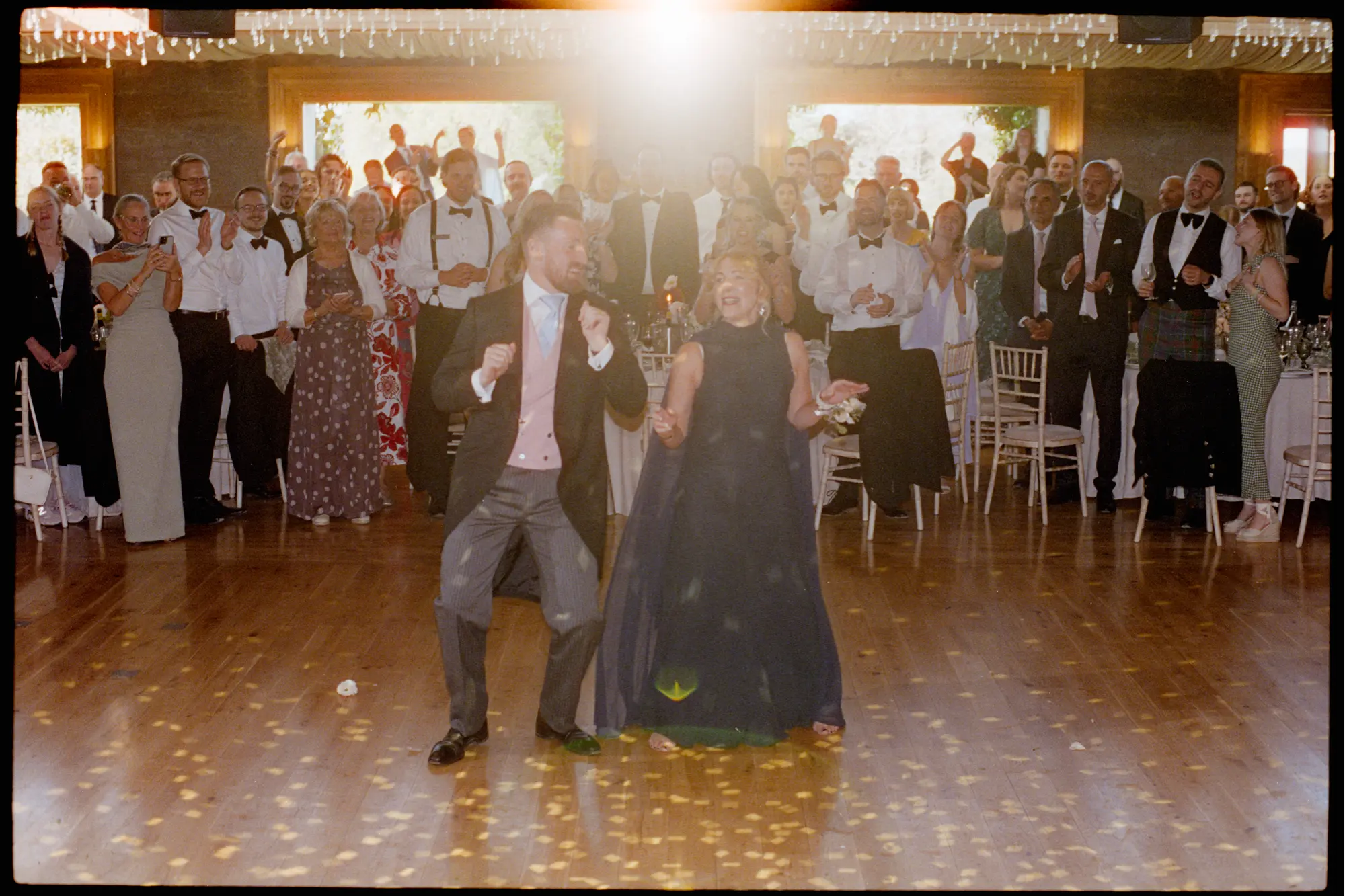
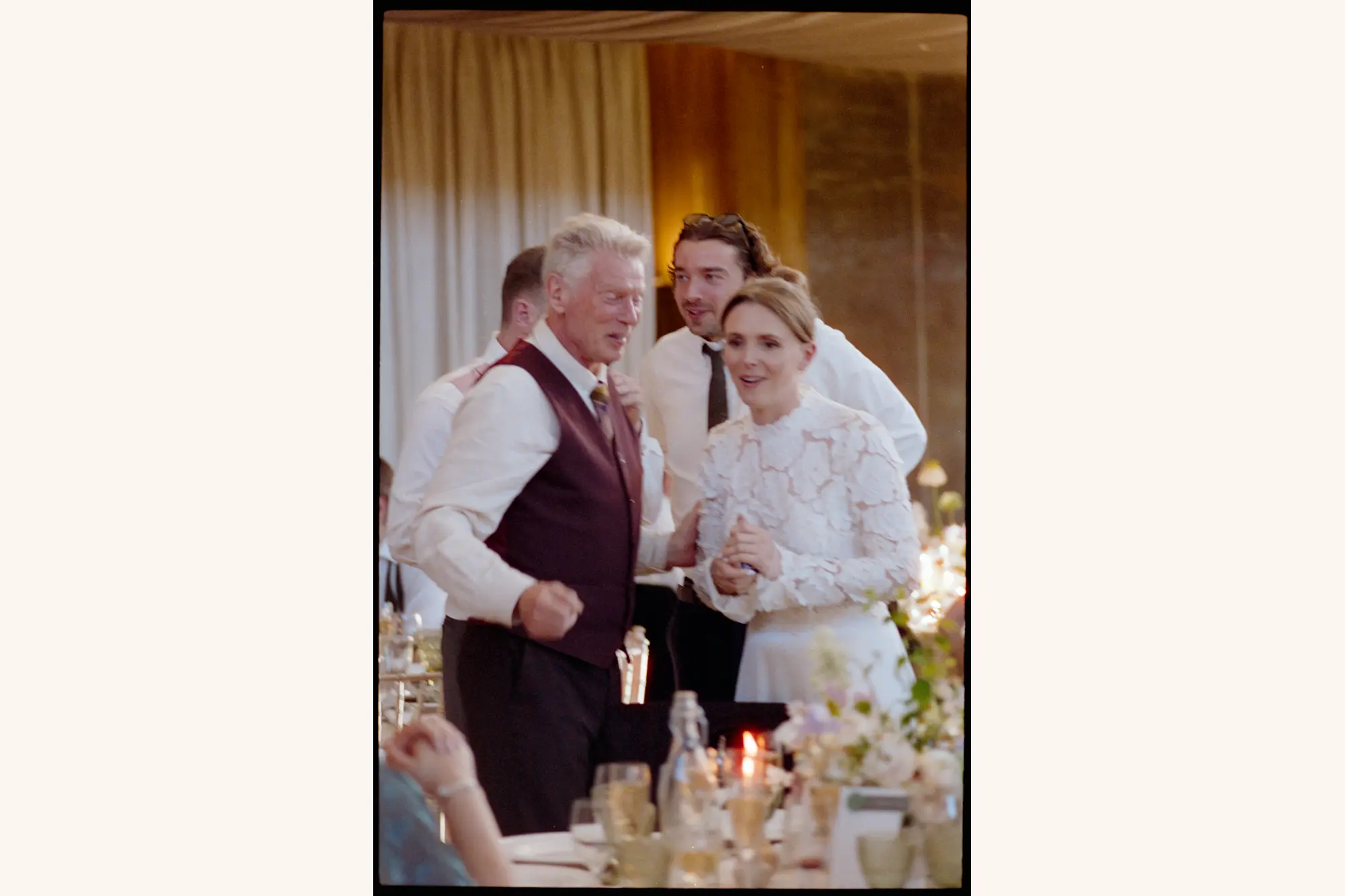

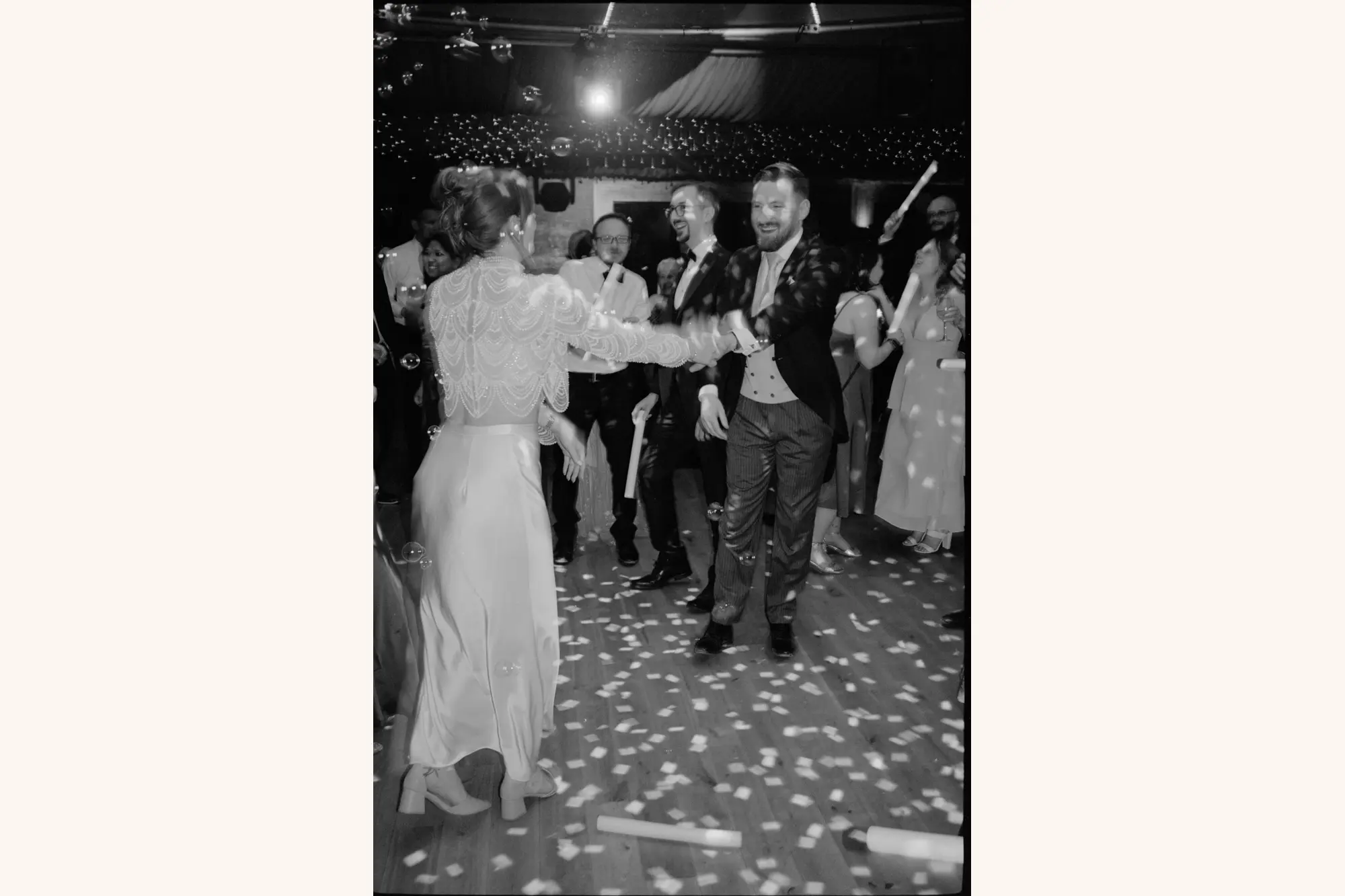

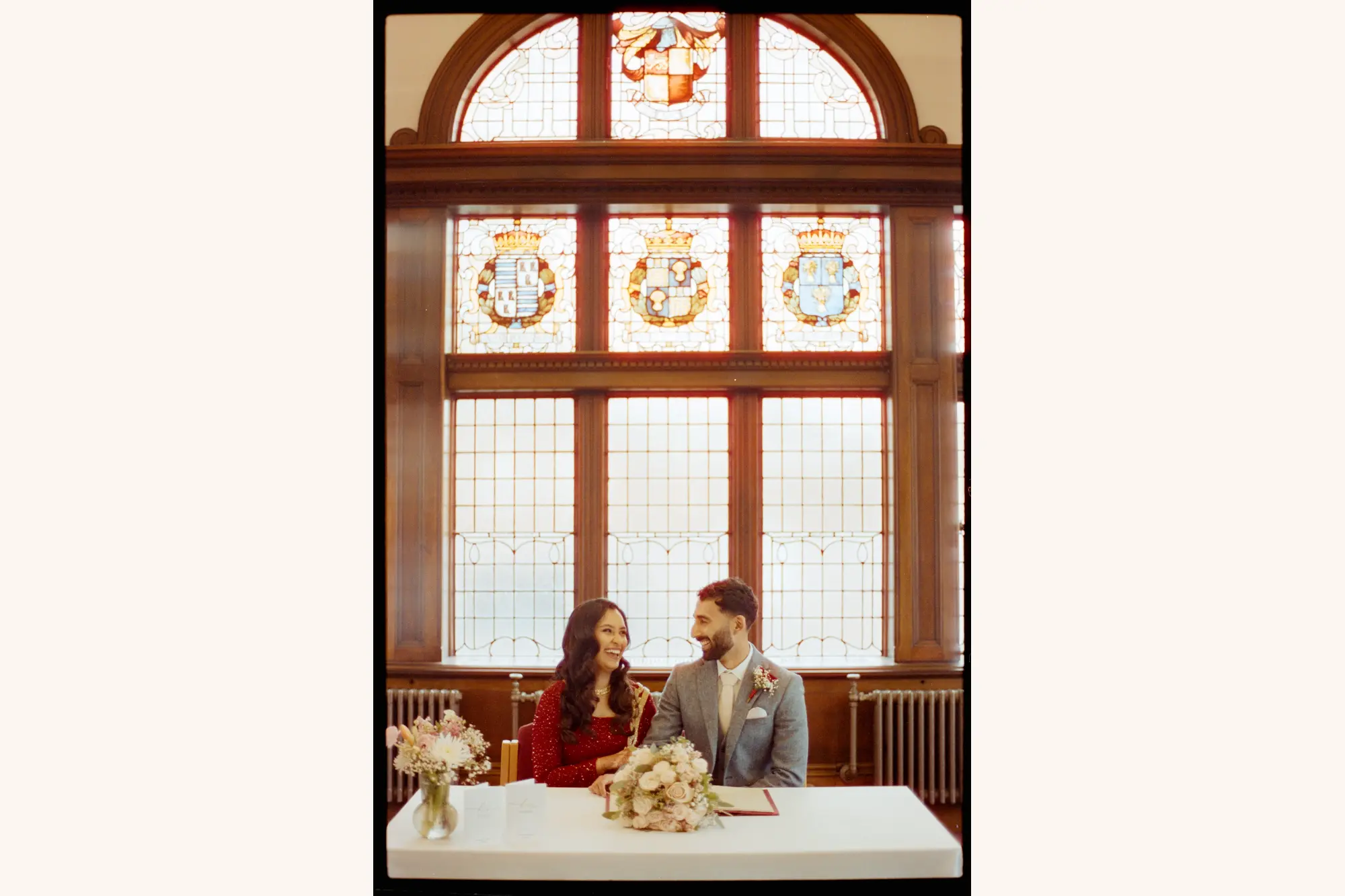
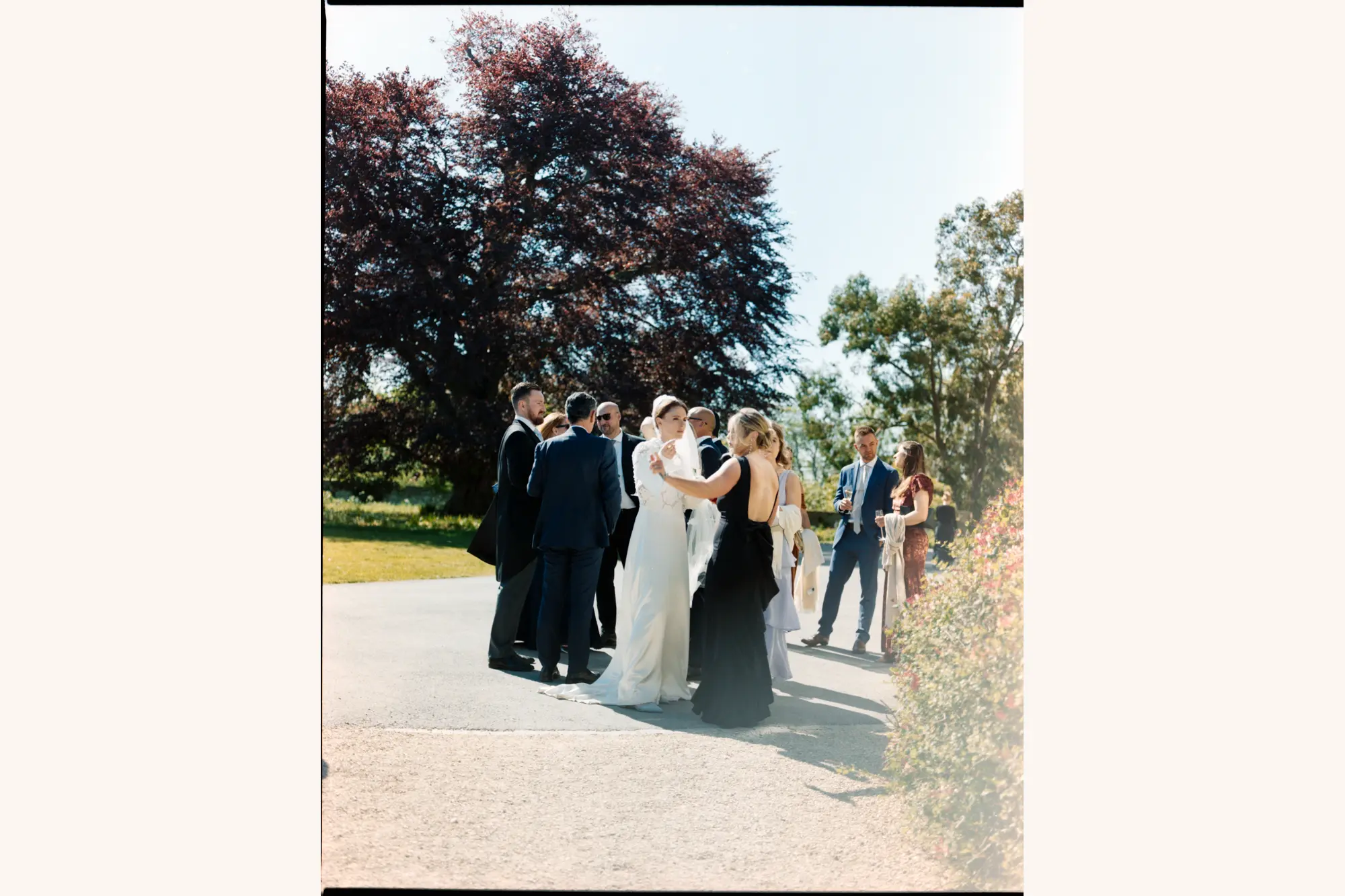
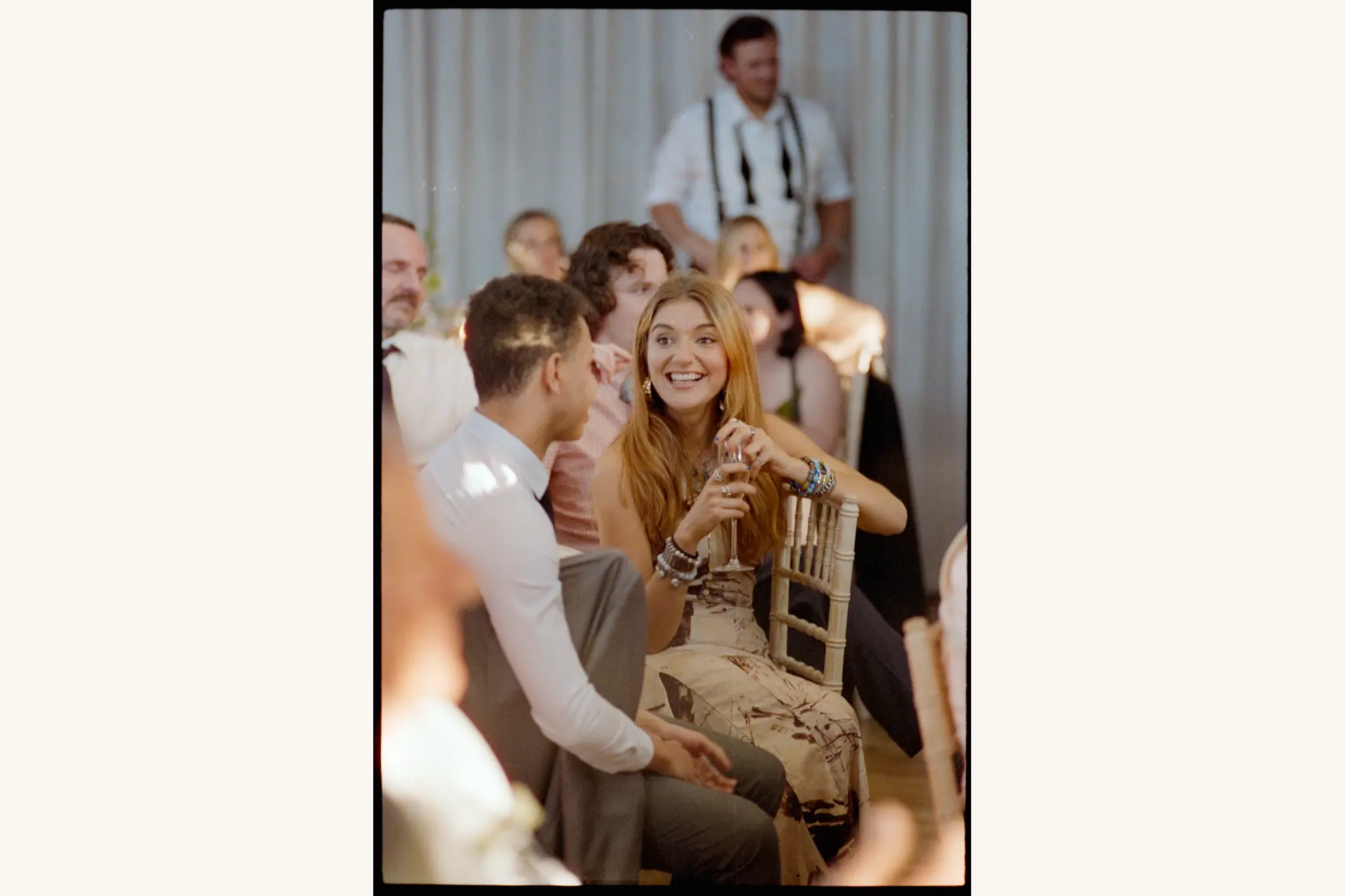
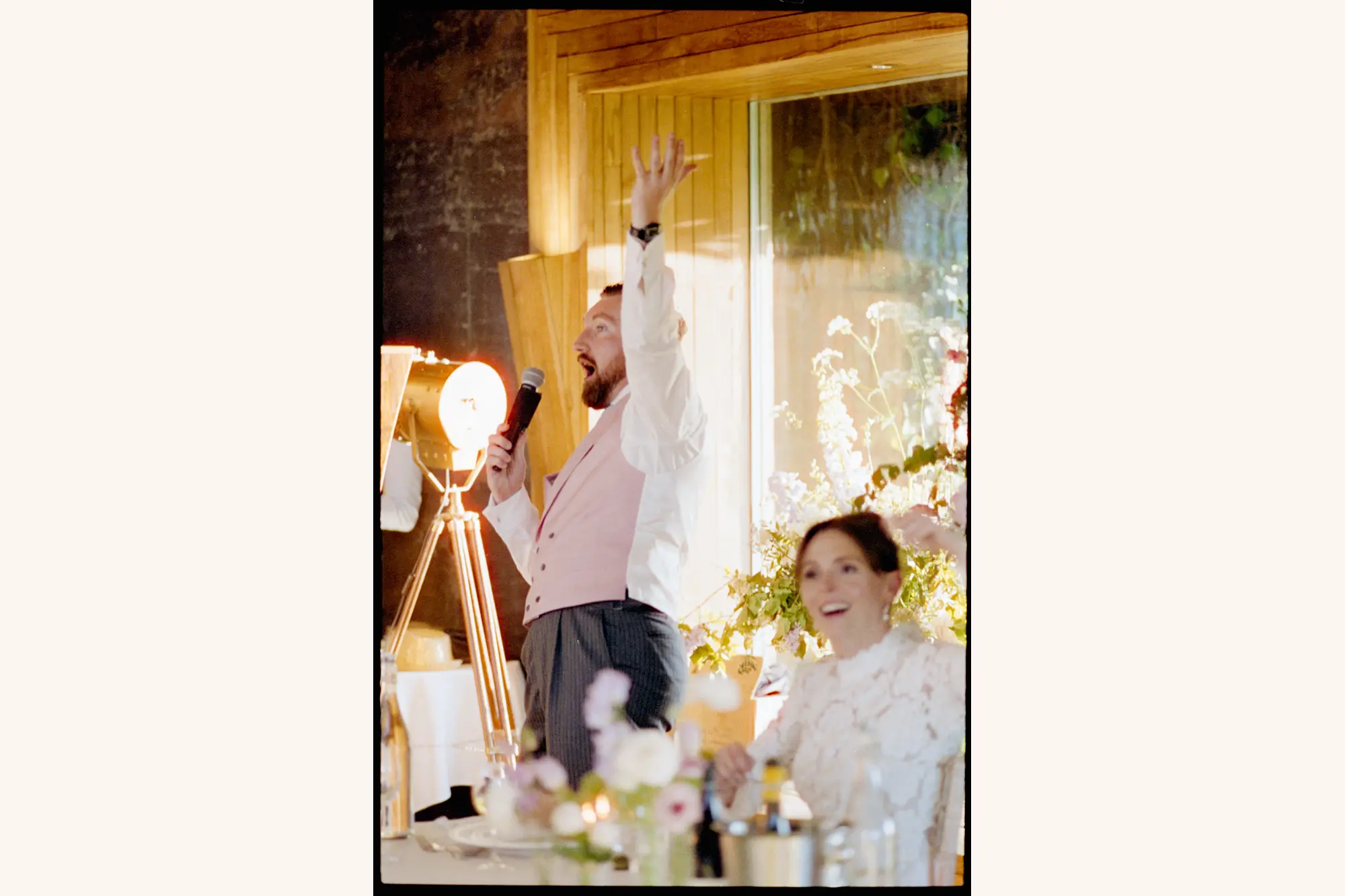
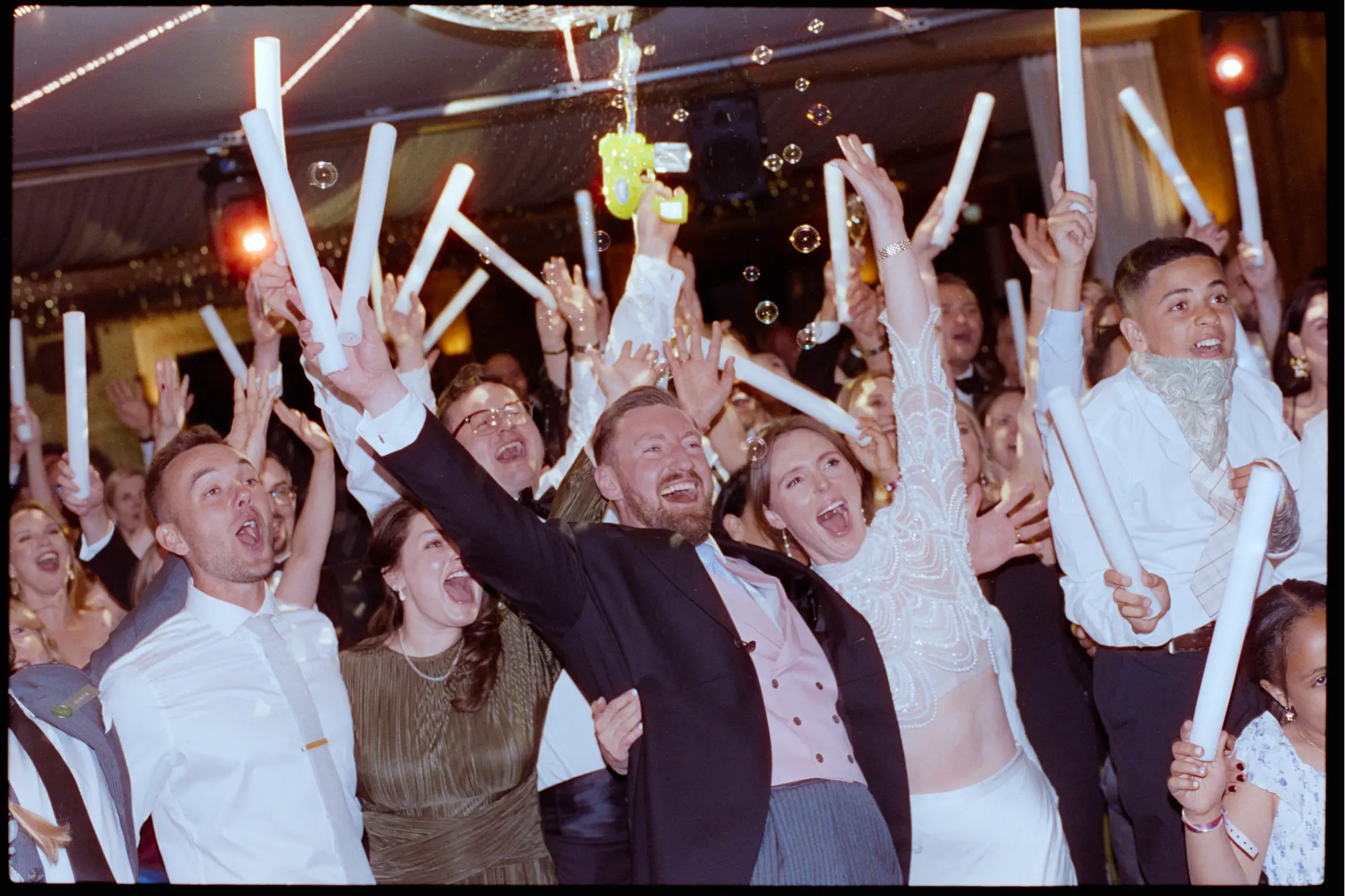
Film and digital are not enemies, and I don’t think couples need to treat them like a binary choice between romance and practicality. For me, the best approach is usually about using the right medium at the right time, so the final set of photographs feels complete, honest and emotionally rich.

That means film is not there just to be fashionable, and digital is not there just to be functional. They both have character. They both have strengths. And when they’re used well, they can work together beautifully within the same wedding story.
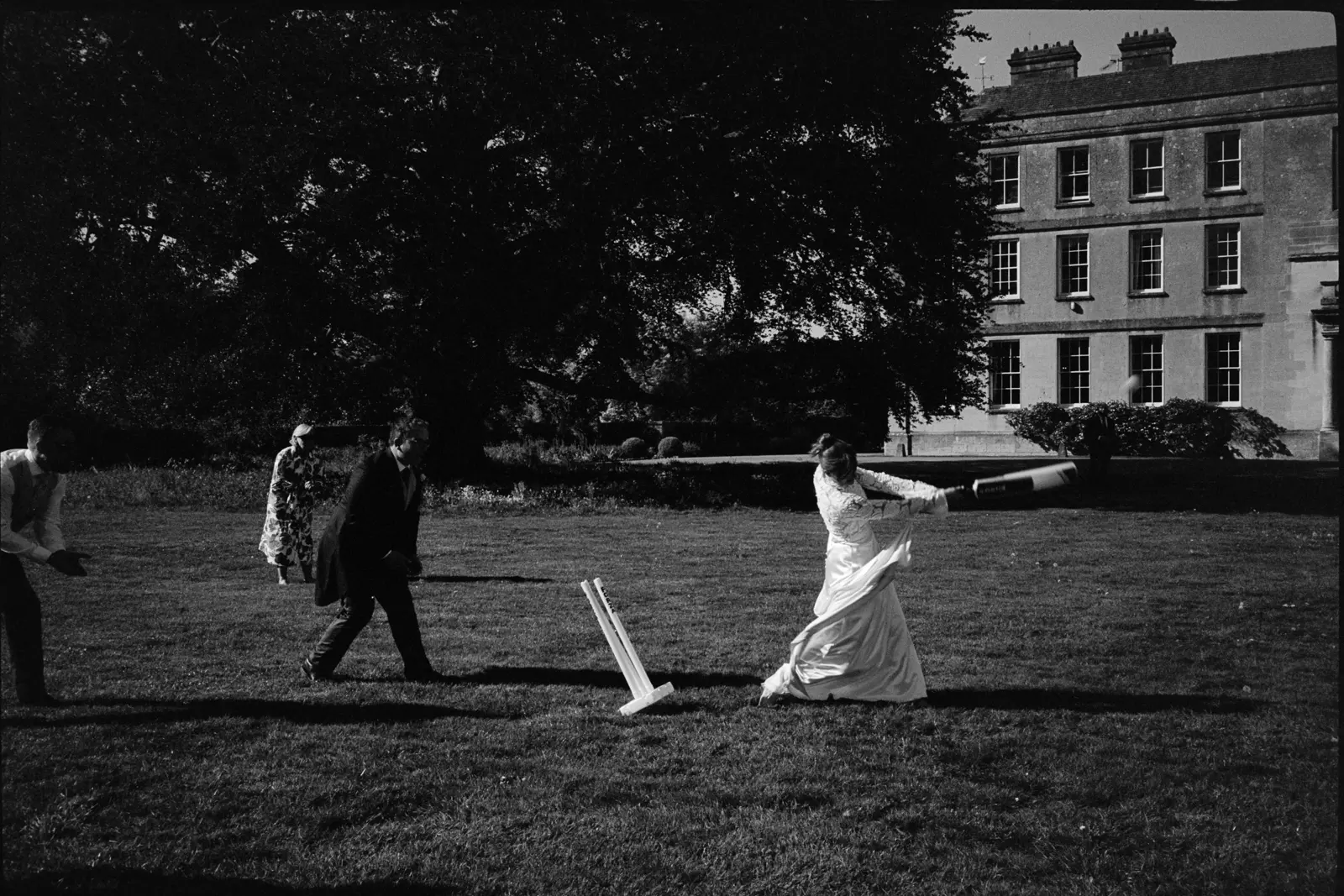
Film feels different because it is different. It has grain, softness, depth and tiny imperfections that make photographs feel tactile and alive. The colours can feel richer or gentler in a way that often lands emotionally before it lands intellectually – you don’t just see the image, you feel something from it.
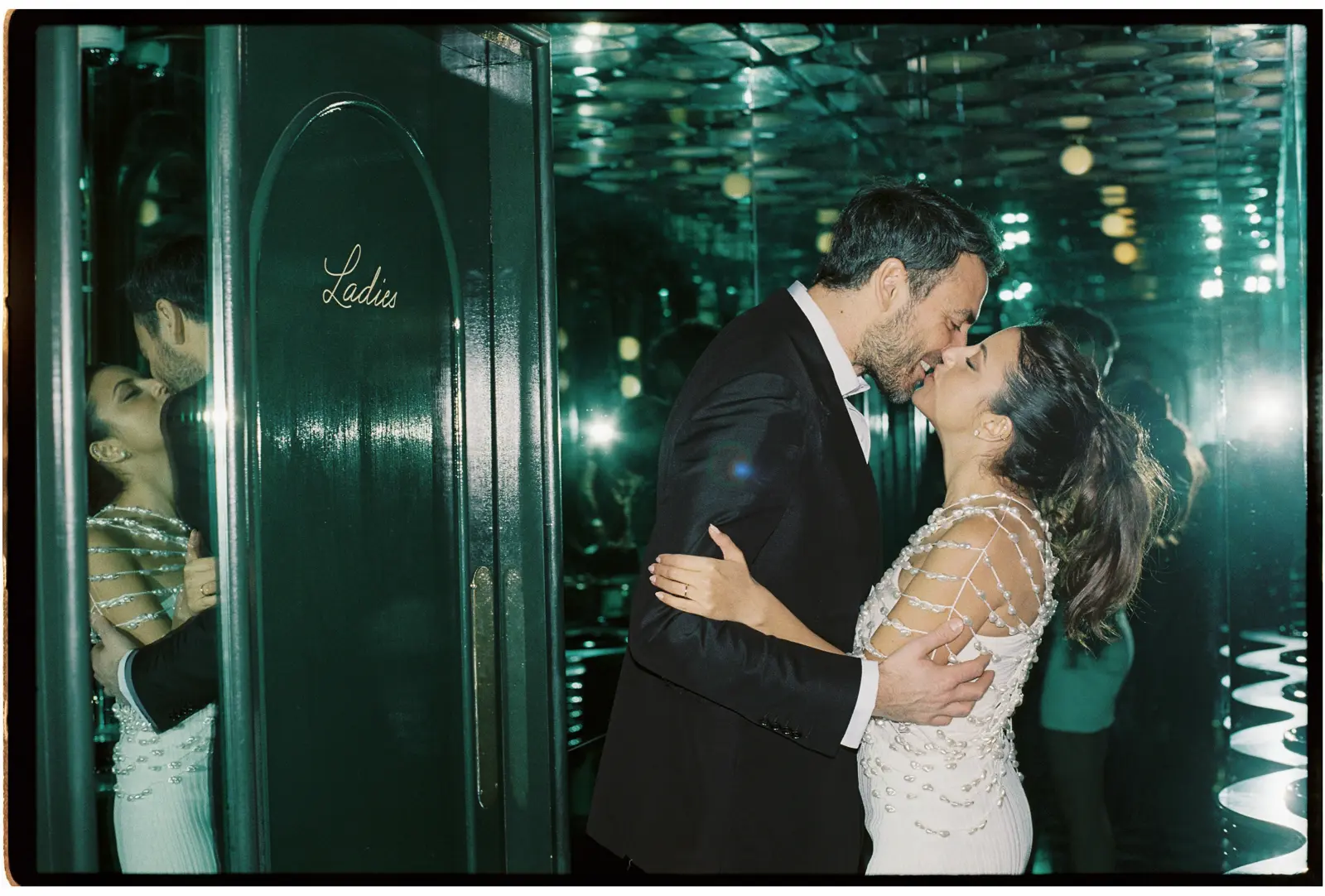
One of the things I love most about shooting film at weddings is that it changes the rhythm of seeing. Every frame matters a little more. That doesn’t mean I become passive or miss things – it means I pay attention in a different way. Film asks for intention, and I think weddings benefit from that.

Some photographs matter because they are clinically sharp and technically flawless. Others matter because they feel exactly like the moment felt. Film is often brilliant at the second kind. It can hold atmosphere, mood, emotion and imperfection in a way that feels incredibly human.
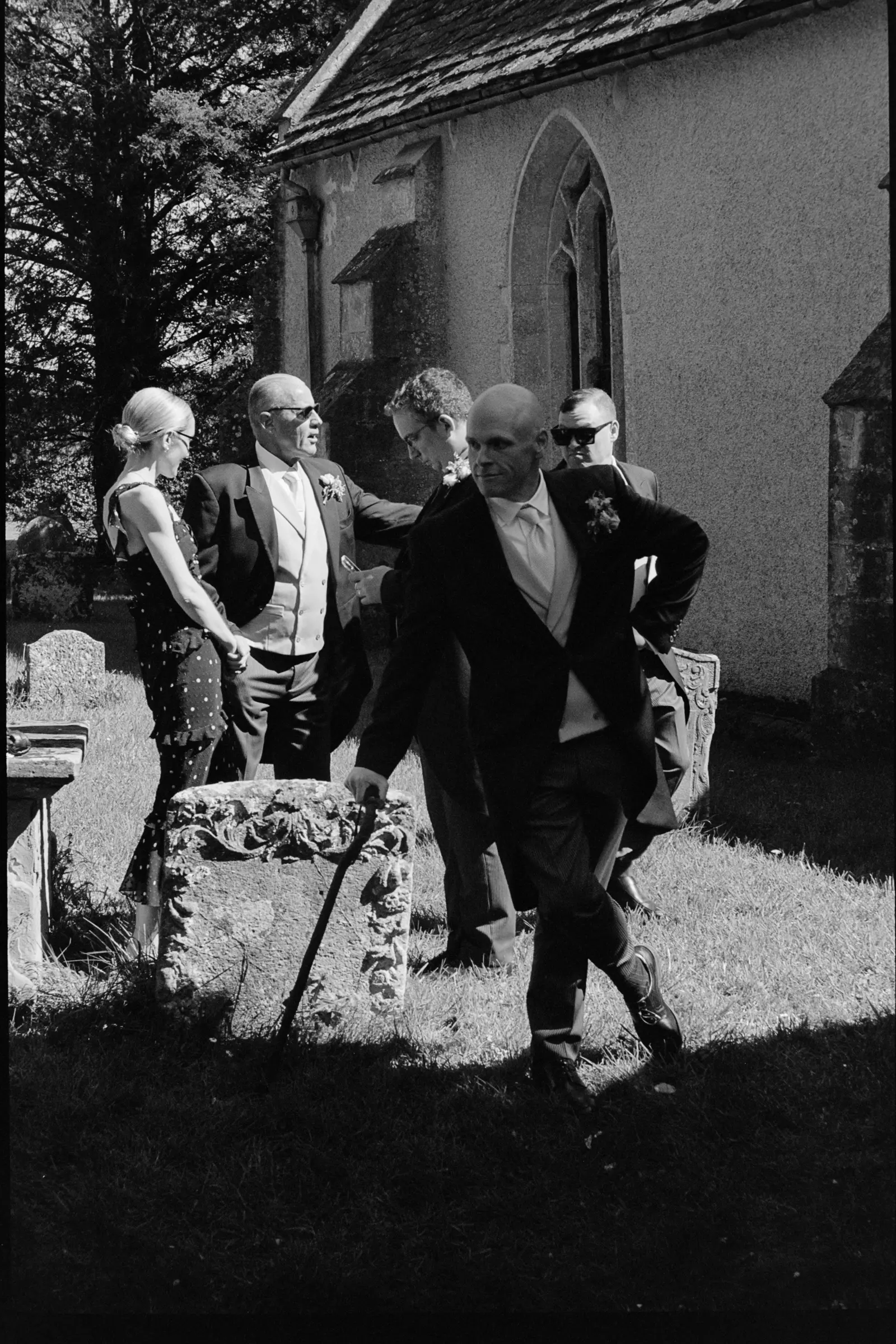
Weddings can move wildly quickly. Timelines slip, people laugh suddenly, hugs happen out of nowhere, dance floors erupt, weather turns, light disappears. Digital gives me speed and flexibility when the pace shifts and the moments start flying.

There are parts of a wedding day where digital is simply the smartest tool. Fast-changing light, darker spaces, high-energy action, moments where reliability and pace really matter – digital gives me the freedom to react instantly and keep the coverage strong without compromising on quality.

I never think about wedding photography as a collection of isolated hero shots. I think about it as a body of work. Digital helps me build that body of work comprehensively, so the big emotional frames, the little in-between moments and the fast-moving parts of the day all belong together.

If I had to simplify my approach, that’s probably the cleanest version of it. Film brings texture, atmosphere, intention and emotional depth. Digital gives me speed, flexibility and the ability to respond instantly when a moment appears and disappears in a heartbeat.


I’m not interested in handing over a wedding gallery that feels like two different photographers showed up. I want everything to feel cohesive – one day, one story, one emotional arc – even though different tools may have helped me make different parts of it.

This is probably the most important thing to say. Film matters to me a lot. It sits at the heart of how I feel about photography and life, and it has become a big part of my visual language. But my job is not to evangelise film at the expense of everything else. My job is to make the best photographs of your wedding that I possibly can.
If you’re drawn to photographs that feel tactile, soulful, a little imperfect in the best way, and emotionally loaded with colour and atmosphere, film may be a really important part of what you’re looking for.
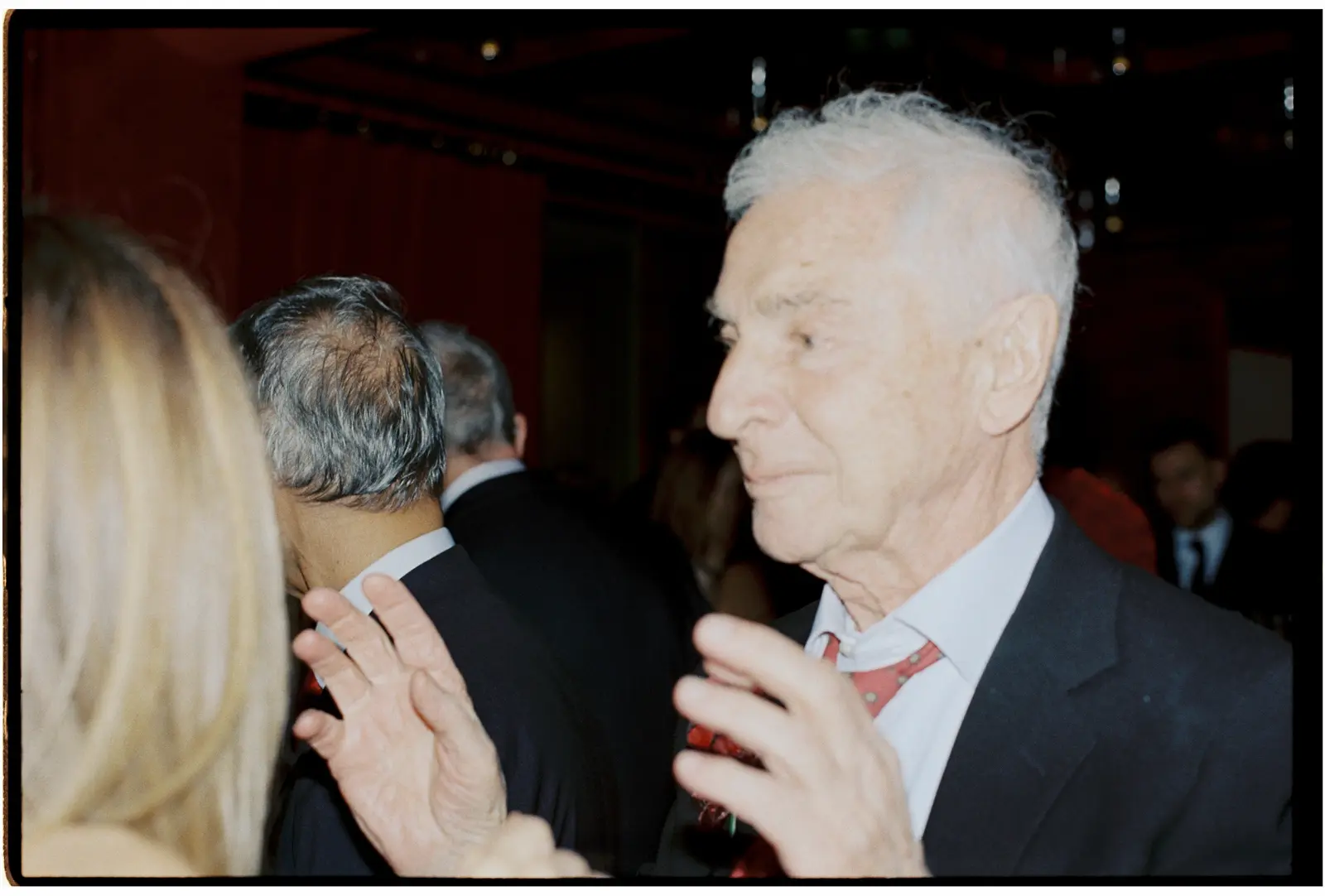
If your priority is fast-moving full-day coverage, adaptability in every lighting situation and a very comprehensive visual record, digital is always going to be a huge part of that conversation.

Honestly, this is where most people end up. The best answer is often not “film or digital?” but “how do we use both well?” That’s where I think the sweet spot usually is – a wedding photographed with enough speed to keep up, and enough soul to feel unforgettable later.

I don’t force the same formula onto every wedding. Some days naturally invite more film. Some need me to lean harder on digital. Most benefit from both. What matters is the shape and atmosphere of your day, the light, the pace, the people and the emotional rhythm of it all.

This is a huge part of why film means what it means in my business. I don’t just shoot it – I develop it and scan it myself too (in the dARJroom). So when film is part of your wedding photography, it stays personal from the moment I press the shutter to the moment you see the final image.

I’m not there to prove how artistic I am by using the hardest possible process, and I’m not there to show off how efficient I can be either. I’m there to make photographs that feel like your wedding – your people, your atmosphere, your love, your chaos, your beauty, your iconic moments.
No. You absolutely do not need to have that figured out before you get in touch. A lot of couples just know they love the work and want to understand how it all fits together. That’s a completely normal place to start.
Usually, yes. Film comes with the added cost of stock, development, scanning and a slower, more hands-on process. But for couples who care deeply about how their photographs feel, it can be one of the most meaningful things to include.
For the right wedding, yes. But most couples find that a blend of film and digital gives them the best balance of beauty, atmosphere, flexibility and coverage.
Yes. I’m never choosing film at the expense of your coverage. If I’m using film, I’m doing it in a way that adds depth and character to the story while keeping the record of the day strong and complete.
If you love texture, atmosphere, emotion and photographs that feel like memory, film might become one of your favourite parts of your wedding photography. If you want speed, adaptability and full-on responsiveness to every shift in the day, digital matters enormously.

And if you’re anything like most of my couples, the answer is probably not one or the other. It’s both – used carefully, artistically and with total commitment to what your wedding actually feels like when you’re living it.
If that sounds like your kind of thing, you can explore more of my wedding photography portfolio, read more about my approach as a film wedding photographer, browse some film wedding photos, or head to my wedding photography prices page for the practical bits.

Film & Digital Wedding Photography by ARJ Photography® – Adam Johnson is a well established photographer who has been photographing weddings in Cheshire and around the world for over a decade. He has been named the UK Wedding Photographer of the Year twice by The Wedding Industry Awards, and Best of the Best twice by Junebug Weddings, as well as receiving over 100 other wedding photography awards for his work. Favouring a rich, colourful style of wedding photography with a strong focus on emotion and the iconic moments, Adam is highly in demand and only opens up his diary to 20 weddings per year.
The best wedding photography of 2025 150 favourites from Cheshire Wedding Photographer ARJ Photography® Every year I...
Read More
Northbrook Park Indian Wedding A Summer Northbrook Park Indian Wedding and Civil Ceremony day for N+O Venue:...
Read More
A Hertfordshire Home Marquee Wedding A Church Ceremony and Home Marquee Wedding reception for S+M Video: Chris...
Read More


